
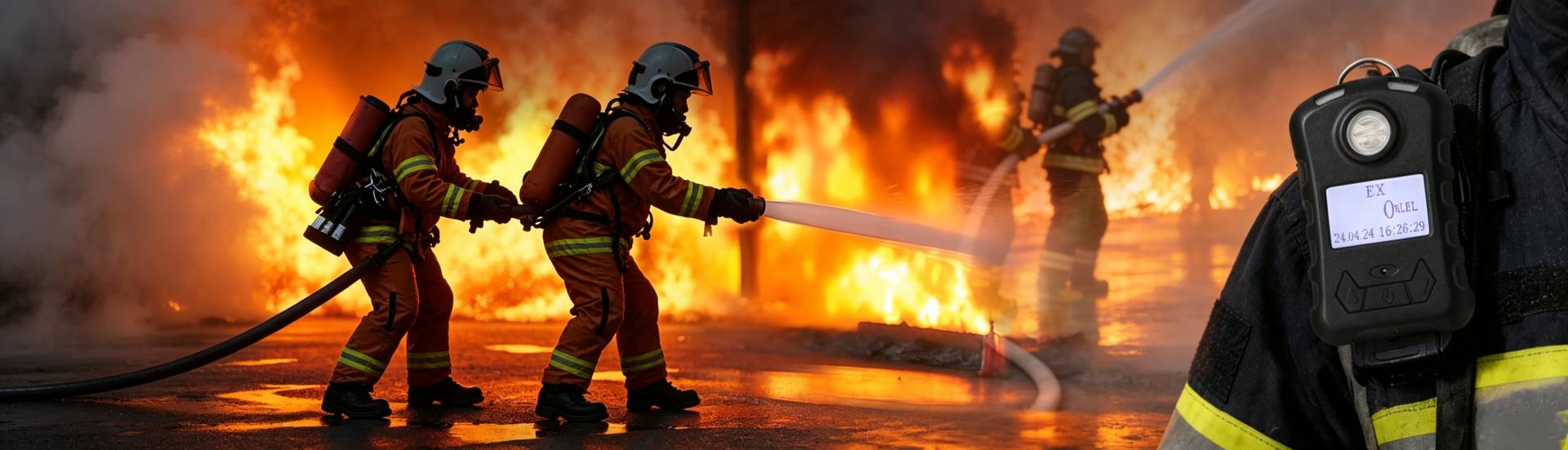
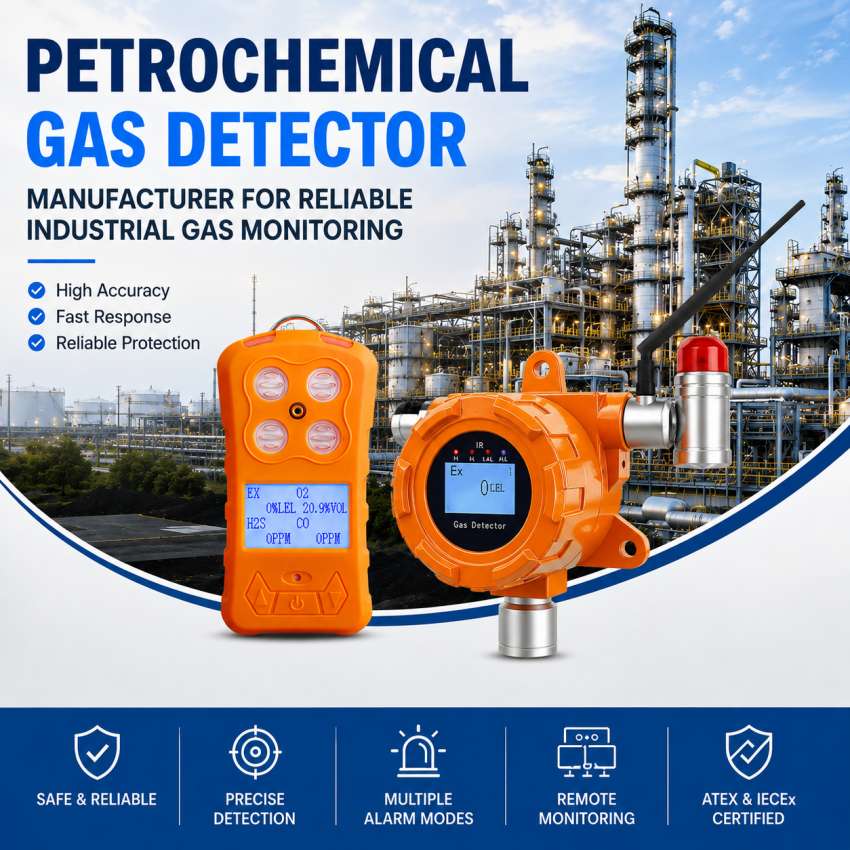
Petrochemical Gas Detector Manufacturer for Reliable Industrial Gas Monitoring
In the modern petrochemical industry, the continuity of safe production and operation depends to a great extent on the high-precision and reliable gas detection system. * * Petrochemical gas detector manufacturer * * plays a key role in helping refineries, chemical plants and offshore platforms reduce the risks of toxic, flammable and explosive gases. With the increasingly complex industrial environment, the demand for high-performance gas monitoring solutions is also growing.
This paper will introduce the working principle of petrochemical gas detector, its importance, and the key factors that need to be considered when selecting reliable industrial gas monitoring manufacturers.
Overview of petrochemical gas detection system
Petrochemical plants usually deal with a large number of dangerous substances, such as methane (CH), hydrogen sulfide (HS), carbon monoxide (CO) and volatile organic compounds (VOCs). Even a small leak may lead to fire, explosion or serious health hazards.
The petrochemical gas detector is used to monitor the air quality and detect the change of dangerous gas concentration in real time. Usually installed in the following areas:
Refinery processing unit
Storage tank area
Pipeline corridor
Compressor station
Limited space of chemical plant
By early warning, these systems can intervene in time before the accident expands.
Why industrial gas monitoring is crucial?
Industrial gas monitoring is not only a legal requirement, but also a core safety strategy.
1. Ensure the safety of personnel
In petrochemical environment, gas leakage may lead to poisoning, suffocation or long-term health damage. Continuous monitoring can give an alarm immediately when the gas exceeds the standard.
2. Prevent explosion accidents
Combustible gases such as methane and propane may explode under certain conditions. Timely detection can significantly reduce the risk.
3. Comply with laws and regulations.
The industry should comply with international safety standards such as ATEX, IECEx and OSHA, and a reliable inspection system is helpful for compliance.
4. Improve operational efficiency
Unplanned downtime caused by gas leakage is very expensive, and the monitoring system can reduce production interruption.
Type of petrochemical gas detector
Professional manufacturers of petrochemical gas detectors usually provide the following product types:
Fixed gas detector
Long-term installation in high-risk areas for continuous monitoring of large petrochemical facilities.
portable gas detector
For field workers to carry around, suitable for confined space or maintenance work.
All-in-one gas detector
It can simultaneously detect a variety of gases, such as HS, CO, O and combustible gases.
Infrared and catalytic sensors
It is suitable for gas detection in high precision and harsh industrial environment.
Key characteristics of high quality gas detector
When selecting the manufacturer of petrochemical gas detector, we should focus on the following performance:
High precision sensor
It can detect low concentration gas and realize early warning.
Fast response time
In an explosive environment, a delay of a few seconds may have serious consequences.
Resistance to harsh environment
Equipment should be able to withstand high temperature, high humidity, dust and corrosive gases.
Remote monitoring function
Support real-time data upload to the control center or cloud platform.
Alarm system integration
It has sound and light alarm and system linkage function to ensure quick response.
How to choose the right manufacturer
It is very important to choose a reliable manufacturer of petrochemical gas detector, and it is suggested to focus on the following aspects:
1. Industry experience
Manufacturers with experience in petroleum, natural gas and chemical industries have a better understanding of the actual working conditions risks.
2. Certification qualification
Products shall meet the following international standards:
ATEX (explosion-proof certification)
IECEx (international explosion-proof standard)
CE and ISO certification
3. R&D capability
Strong research and development capabilities mean that sensor technology and system performance continue to upgrade.
4. Customization ability
The requirements of different petrochemical projects are quite different, so it is particularly important to support OEM/ODM customization.
5. After-sales service
Including technical support, calibration service and maintenance system, is the guarantee of long-term stable operation.
Application scenarios of petrochemical industry
Petrochemical gas detectors are widely used in:
refinery
Natural gas treatment plant
Chemical production facilities
LNG storage terminal
marine drilling platform
In these high-risk environments, continuous gas monitoring is a basic safety measure.
Future trend of industrial gas monitoring
The gas detection industry is developing rapidly, and the main trends include:
The gas monitoring system based on the Internet of Things realizes real-time data access in the cloud.
Predictive maintenance of artificial intelligence to identify sensor performance degradation in advance
Wireless gas detection equipment improves deployment flexibility.
Multi-system integration platform (gas+fire+environmental monitoring integration)
These technologies are significantly improving the safety level and response efficiency of the petrochemical industry.


 WhatsApp: 8619339980364
 E-mail: contact@hirepsafety.com