
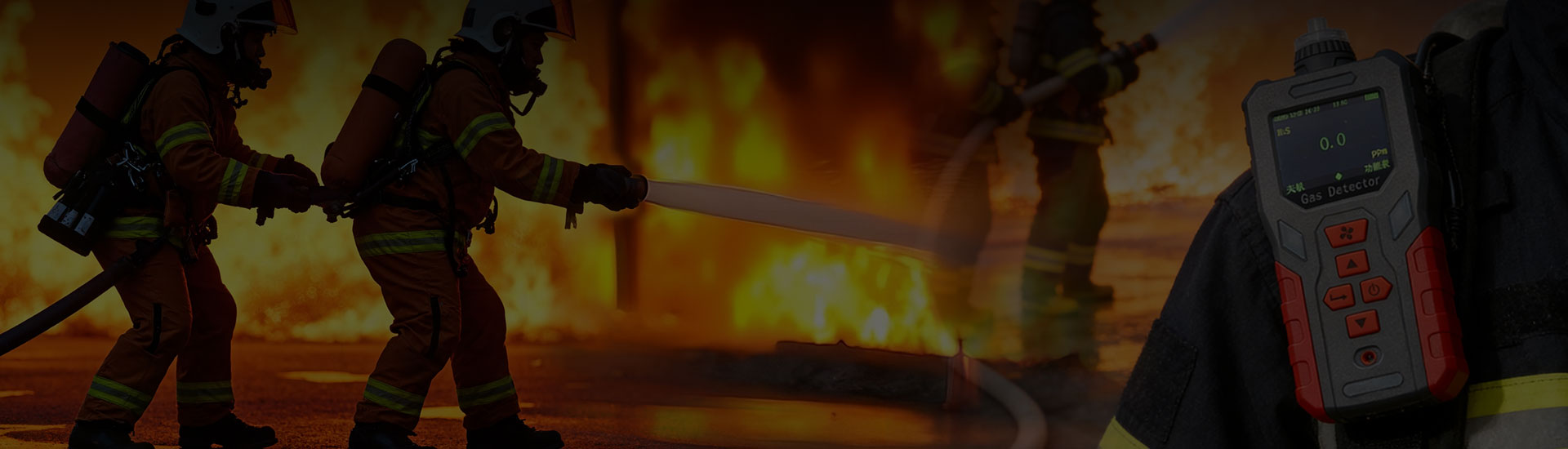
different types of gas detectors
Gas detectors play a vital role in the broad fields of industrial production, family safety and environmental protection. They are an extension of human senses, and can capture those colorless and tasteless but potentially fatal danger signals. However, faced with the dazzling array of products on the market, many people are often puzzled: why are some detectors suitable for detecting methane, while others are specifically aimed at carbon monoxide? Why are industrial-grade equipment so expensive and domestic ones relatively cheap? The answer is that “different types of gas detectors” adopt completely different sensing technologies and working principles. Understanding these differences is not only the key to selecting suitable equipment, but also the cornerstone of building an effective safety protection system.
In order to deeply understand the classification of gas detectors, we must first start with the core “sensing principle”, because this is the fundamental factor that determines the performance, life and applicable scenarios of detectors. At present, the mainstream technical routes mainly include catalytic combustion, electrochemical, infrared, semiconductor and photoionization detector (PID). Each technology has its own unique “personality” and good field.
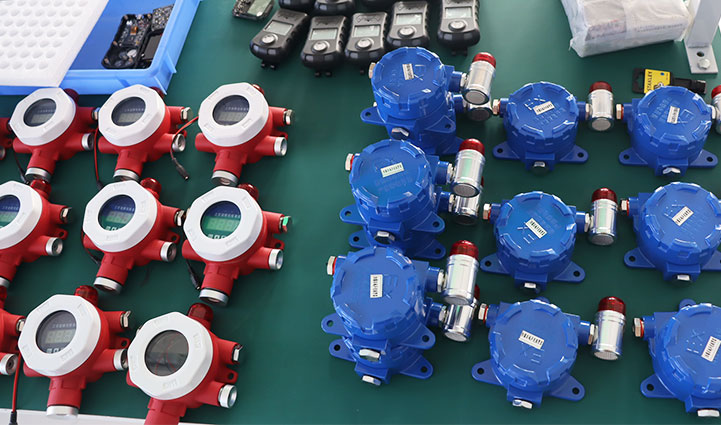
Catalytic combustion detector is the most classic and widely used technology to detect combustible gases (such as natural gas, liquefied petroleum gas, hydrogen, etc.). Its core principle is to use the catalyst to make the combustible gas burn flameless on the surface of the detection element, which leads to the temperature rise and resistance change of the element, thus measuring the gas concentration. The biggest advantage of this technology lies in its accurate measurement, good linearity, response to most combustible gases and relatively moderate cost, so it has become the first choice for petrochemical industry, underground coal mines and household gas alarms. However, it also has obvious shortcomings: it must work in an aerobic environment, and it is easily affected by “poisoning” of silicon compounds, sulfides and other substances. Once the sensor is poisoned, it will be permanently ineffective, so it needs to be used with caution in a complex environment containing inhibitory substances.
Unlike catalytic combustion, which focuses on “explosion prevention”, electrochemical detector is the main force to detect toxic gases (such as carbon monoxide, hydrogen sulfide, chlorine gas, etc.) and oxygen. Its working principle is similar to that of a micro-battery. When the target gas diffuses into the sensor, an oxidation or reduction reaction will occur, and a current signal proportional to the gas concentration will be generated. The biggest highlight of electrochemical sensor is its extremely high sensitivity, which can detect trace toxic gases of ppm (one millionth) or even ppb (one billionth) level, and its power consumption is extremely low, so it is very suitable for portable detector and fixed toxic gas monitoring. However, the life of electrochemical sensors is usually short (generally 2-3 years), and they are easily affected by temperature and humidity changes, so they need to be calibrated regularly to maintain accuracy.
With the development of technology, NDIR detector occupies an important position in the high-end market because of its excellent performance. It uses the absorption characteristics of different gas molecules to detect the concentration of infrared light with a specific wavelength. Because it is a non-contact measurement, the infrared sensor has high stability, will not be “poisoned”, has a service life of 5-10 years, and can work normally in an anoxic environment. This makes it an ideal choice for detecting high-concentration carbon dioxide and methane and long-term monitoring in harsh industrial environment. Although its initial cost is high, considering the long-term maintenance cost and reliability, its cost performance ratio is higher in large petrochemical projects and environmental monitoring.
In addition, there are two special types of detectors worth mentioning. The semiconductor detector uses the principle that the resistance of metal oxide semiconductor material changes after absorbing gas, which is low in cost and simple in structure, and is widely used in household alarms. Although it responds to many gases (cross-interference is large) and its accuracy is not as good as the previous ones, it still plays a huge role in the scene of family which is cost-sensitive and mainly needs qualitative early warning. Photoionization detector (PID) is the nemesis of volatile organic compounds (VOCs). It can detect very low concentrations of organic vapors, and is often used in the fields of environmental emergency monitoring, leakage investigation and occupational health. It is the “golden eye” of environmental law enforcement and industrial hygiene.
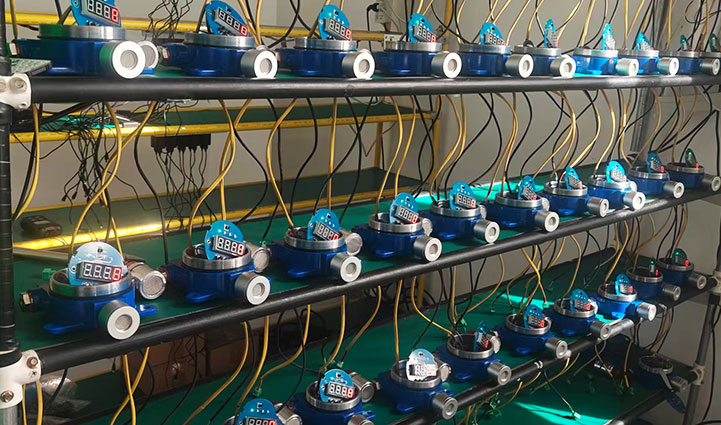
In addition to classification by principle, gas detectors are often classified into portable and fixed types according to their forms in practical applications. Portable detectors, like soldiers’ personal equipment, are flexible and maneuverable. They are mainly used for patrol inspection, detection before entering confined spaces and emergency rescue. They require small size, light weight and long battery life. Stationary detectors, like sentries, stick to key positions for 24 hours and continuously monitor the gas concentration in specific areas. Usually, they need to be connected to a control system to realize the functions of sound and light alarm, fan linkage or valve cut-off.
When choosing different types of gas detectors, we should not blindly pursue high parameters, but should follow the principle of “applicability”. First of all, it is necessary to make clear what gas the detection target is, whether it is explosion prevention or poisoning prevention. Secondly, environmental factors should be considered. Is there high temperature, high humidity, dust or interference gas? Then there is the ability of budget and maintenance. Do you need equipment with low one-time investment but frequent maintenance or equipment with high initial investment but long-term stability? For example, in the sewage treatment plant to detect hydrogen sulfide, electrochemical sensors are standard configuration; In the natural gas pipeline transportation station, infrared or catalytic combustion is a more reliable choice; If the indoor air quality is evaluated to detect formaldehyde or benzene series, PID or special semiconductor sensor is more suitable.
To sum up, different types of gas detectors constitute a multivariate matrix of modern safety protection. From the stability of catalytic combustion and electrochemical sensitivity, to the accuracy of infrared, the economy of semiconductor and the broad spectrum of PID, every technology guards the safety of life and property on a specific track. With the integration of microelectronics and artificial intelligence, future gas detectors will be more intelligent and networked, and can realize self-diagnosis, remote calibration and multi-parameter fusion analysis. However, no matter how iterative the technology is, understanding and correctly selecting the type of gas detector suitable for your own needs is always the first hurdle to prevent gas risks. Only by letting the right detector appear in the right position can we really see through the invisible risks and build an indestructible safety barrier for production and life.


 WhatsApp: 8619339980364
 E-mail: contact@hirepsafety.com