
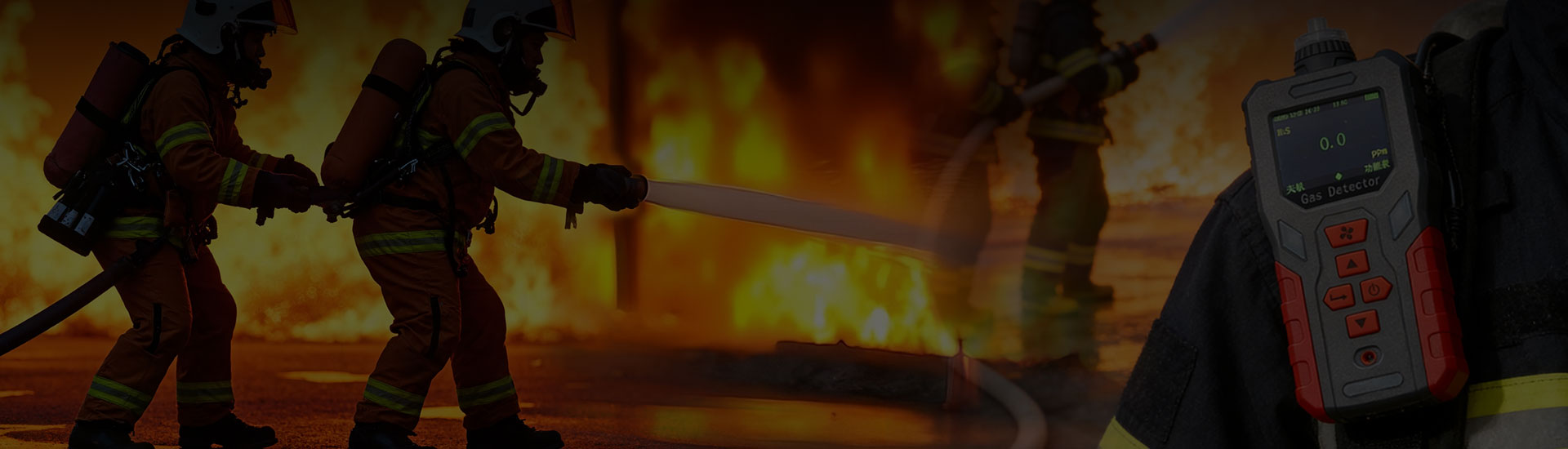
How to choose a suitable portable gas detector?
In the complex layout of industrial safety, portable gas detector is not only the standard of compliance, but also the last line of defense for workers to survive. Its selection process is actually a deep game of risk cognition and technical details, and it is by no means a simple parameter comparison or price consideration. Faced with a dazzling array of market options, blind pursuit of multi-function or low price often lays a huge hidden danger. The real scientific selection begins with a thorough analysis of the working environment, and different scenarios breed completely different gas risk maps. The toxic hydrogen sulfide and the explosion threat of combustible gas coexist at the oil refining site, which requires the equipment to have strong anti-poisoning ability and millisecond response speed, while the trace hydrogen arsenide leakage in the semiconductor workshop is the invisible killer. At this time, high-sensitivity photoionization detector becomes the only choice. The tiny fluctuation of oxygen concentration in underground pipe gallery is often fatal before toxic gas, so the stability of sensor overrides all functions. Abandoning the myth that “more functions are better”, accurately matching the core risk dimension and eliminating flashy redundant functions are the starting points of professional selection.
The underlying logic of sensor technology directly determines the upper performance limit of the equipment. Although the catalytic combustion sensor is low in cost and mature in technology, it is vulnerable to poisoning by substances such as silicon, sulfur and lead, which makes it vulnerable in a specific chemical environment. With the advantages of being unaffected by anoxic environment, strong anti-poisoning ability and long service life of more than five years, infrared absorption sensor is gradually becoming the new favorite of combustible gas detection. However, reducing the calibration frequency and replacement frequency brings huge life-cycle benefits, and electrochemical sensors in the field of toxic gas detection are still the mainstream. However, the electrolyte formula, electrode structure and temperature compensation algorithm of different manufacturers are very different, which leads to different readings in extreme environments. Cross-interference data must be deeply studied when selecting models to avoid false negative fatal errors in complex mixed gas environments, and the physical protection quality is also subject to the ultimate test of environmental severity. Excellent equipment should resist the storm wash and dust attack like industrial special forces, reach the IP68 dust-proof and waterproof standard, and run stably in extreme cold and heat. The shell material should find a perfect balance between firmness and lightness to ensure that the function is still intact when falling from a height. The explosion-proof certification is not a dead letter, but a solemn promise that the equipment will not become an ignition source in flammable and explosive areas. The grade of dangerous areas covered by certification marks must be strictly checked.
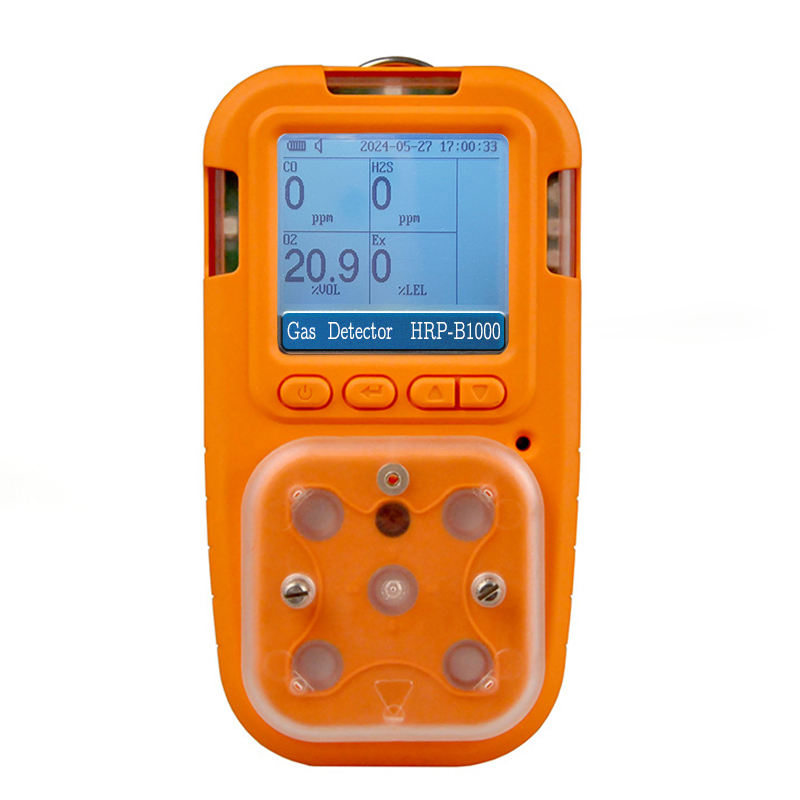
The penetration of the Internet of Things and big data technology is pushing the portable detector to turn from a stand-alone tool to an intelligent terminal. The traditional acousto-optic alarm is often inadequate in a large factory area or a noisy environment. The modern selection must consider the interoperability, seamlessly transmit the real-time concentration, personnel position and equipment status to the central control room through Bluetooth, 4G or special LAN, and build a dynamic safety awareness network. Once a leak occurs, the system can not only inform the site to evacuate. It can also link emergency facilities and guide rescue. The data recording function has become a valuable asset for accident recovery and safety audit. The high-precision historical curve restores every second change before and after the accident. The cloud platform realizes remote firmware upgrade and health management, which greatly reduces the operation and maintenance cost. The weight of human factors engineering is increasingly prominent. The interactive design of equipment must conform to intuition, and it must be tested when it is started, silenced by one button, clearly visible in bright light and dark, and the alarm mechanism must be highly aggressive. High-decibel frequency conversion buzzer, 360-degree flashing light and strong vibration are indispensable. Lightweight design and ergonomic clip make workers almost forget their existence in long shifts. Only when the equipment is no longer regarded as a burden but a natural extension can the safety value be maximized.
The purchase price is only the tip of the iceberg. Subsequent sensor replacement, regular calibration, spare parts supply and technical support constitute huge hidden costs. It is far wiser to choose a supplier with strong R&D strength, perfect after-sales network and commitment to long-term spare parts supply than to simply pursue low prices. Regular professional training and actual combat drills allow users to understand the principles and limitations, so as to make correct judgments at critical moments. Choosing the right equipment is a systematic project that integrates scientific judgment, technical screening, environmental adaptation and humanistic care, which is related to the accuracy of data and the safety of fresh life. Only by treating every detail with awe of life can we build an indestructible mobile security defense line, make every departure come back safely, provide silent but firm protection for operators in complicated industrial sites, and make technology truly become a reliable bridge connecting safety and life.


 WhatsApp: 8619339980364
 E-mail: contact@hirepsafety.com