
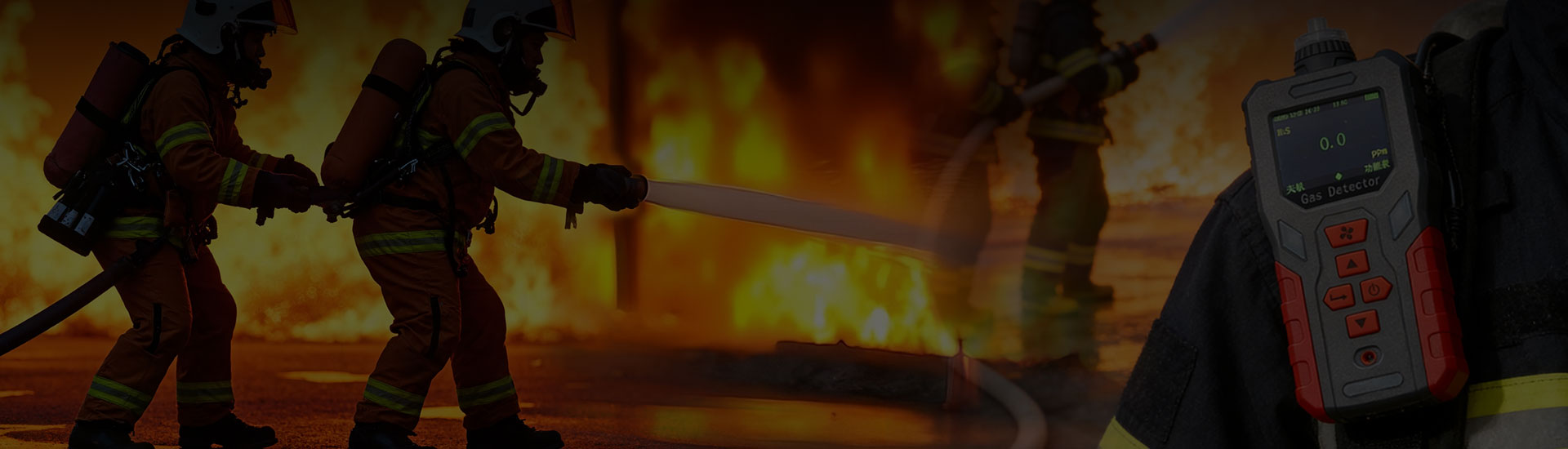
Common Gases Detected by Industrial Gas Detectors
In the huge narrative of modern industry, safety is always the bottom line. From deep mines to complex chemical plants, from busy sewage treatment plants to fine semiconductor workshops, invisible gases threaten time to ambush. As the center of this defense, industrial gas explorer is known as “electronic sentry”. They are not uniform, but tailored to specific chemical threats. It is the cornerstone of building an effective safety management system to deeply understand the types, sources and death mechanism of gases commonly detected by these explorers.
1. Invisible kindling: combustible gas monitoring
Combustible gas detection is the most pervasive requirement in industrial safety. This kind of gas itself may be non-toxic, but once it reaches a certain concentration in the air, it can trigger a catastrophic explosion when it meets Mars. Explorers are usually in units of %LEL (percentage of lower blasting limit), and are designed to provide early warning before a fire occurs.
Methane (CH) is undoubtedly the protagonist. As the main component of natural gas, it widely exists in oil excavation, pipeline transportation and coal mine gas environment. Methane is lighter than air and easy to accumulate at the top of the space, and its lower blasting limit is about 5% by volume. Propane (CH) and butane (CH) often appear in the form of liquefied petroleum gas (LPG) for heating and power fuel. Unlike methane, they are heavier than air, and will flow to low-lying areas, ditches or basements like water after leakage, forming an imperceptible “gas lake”, which is extremely dangerous. In addition, hydrogen (H) is becoming more and more important in oil refining and emerging hydrogen energy industry. Its blasting scale is extremely wide and its incineration energy is extremely low, and small electrostatic sparks can be detonated, so the response speed of the explorer is extremely high.
Second, the silent killer: toxic gas monitoring
If combustible gas threatens facilities, then toxic gas directly threatens life. The detection accuracy of such gases usually requires ppm (parts per million) or even ppb (parts per billion) level.
Carbon monoxide (CO) is called “silent killer”. It comes from incomplete combustion of carbonaceous fuel, such as internal combustion engine, boiler or fire site. CO is colorless and odorless, but it can combine with hemoglobin, and its affinity is more than 200 times that of oxygen, which leads to rapid hypoxia and suffocation of human tissues. Hydrogen sulfide (HS) is another nightmare, which is common in sewage treatment, paper making and oil and gas exploration. It has a typical “rotten egg” smell, but this is precisely its most cunning point: high concentration of HS will instantly paralyze the olfactory nerve, making people unable to smell the taste, thus causing the illusion that “the gas has disappeared” and eventually leading to “electric shock-like” death.
In addition, chlorine (Cl) and ammonia (NH) are also common detection targets. Chlorine gas is used for water treatment and chemical composition, while ammonia gas is used as refrigerant and fertilizer raw material. Both of them are strongly irritating gases, which will severely burn the respiratory tract and eyes and cause pulmonary edema after leakage. In electroplating and mining professions, the detection of hydrogen cyanide (HCN) is even more vital, because it can block cell respiration and cause extremely rapid death.
Third, the yardstick of life: oxygen concentration monitoring
Although oxygen (O) is not poisonous gas, its abnormal concentration is also fatal. The oxygen content in normal air is about 20.9% Vol Industrial prospectors must monitor this value over time.
When the oxygen concentration is lower than 19.5%, it constitutes an anoxic environment. This usually happens in confined spaces (such as storage tanks, cabins and sewers) because oxygen is replaced by inert gases such as nitrogen and carbon dioxide, or consumed by metal corrosion and microbial fermentation. Lack of oxygen can lead to poor judgment, fainting and even death, and victims often fall down without knowing it. On the contrary, when the oxygen concentration is higher than 23.5%, an oxygen-enriched environment is formed. This will not only accelerate the aging of data, but also make the originally non-flammable clothes and grease extremely flammable, and a small fire source can cause severe combustion. Therefore, oxygen detection is a compulsory process before entering any confined space.
Fourth, equipment strategy and summary
In practical application, a single gas prospector often can’t meet the complex requirements, so the “all-in-one” composite prospector has become the mainstream. The most classic equipment is the “four in one” gas detector, which monitors oxygen, combustible gas (%LEL), carbon monoxide and hydrogen sulfide at the same time. This combination covers the risk points of most general industrial scenarios. However, for specific occupations, such as semiconductor manufacturing needs to detect hydrogen arsenide, grain storage needs to detect phosphine, and environmental monitoring needs to detect volatile organic compounds (VOCs), it is necessary to equip special sensors.
To sum up, the detection targets of industrial gas prospectors cover the whole spectrum of threats from flammable and explosive to highly toxic suffocation. The back of each gas corresponds to a specific industrial process and potential risks. Correct identification of these gases, selection of appropriate exploration skills and regular maintenance and calibration are not only compliance requirements, but also the highest respect for life. In this industrial world full of chemical challenges, only by keeping these “electronic sentries” sharp in time can we firmly hold the bottom line of safety while pursuing production efficiency.


 WhatsApp: 8619339980364
 E-mail: contact@hirepsafety.com