
What Is a Gas Detector and How Does It Work?
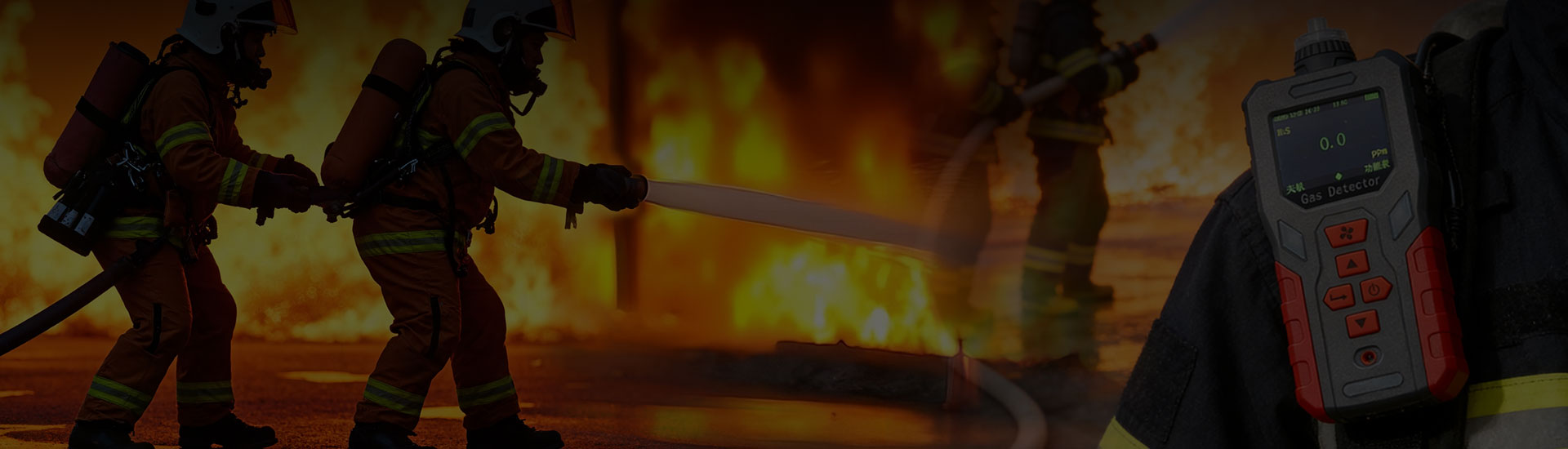
In the vast territory of industrial safety and environmental protection, gas detectors play a critical role as “silent sentries”. This is a precision instrument specifically designed to monitor the presence and concentration of specific gases in the environment, and its central task is to give critical warnings before dangers that are not perceptible to the human senses come.g. Whether it is colorless and odorless lethal gases such as hydrogen sulphide and carbon monoxide, flammable and explosive methane and hydrogen, or the concentration of oxygen necessary to maintain life is abnormal, the gas detector can be captured by the “electronic nose” inside the detector to stifle potential disasters in the bud. To really understand the value of this device, it is necessary to explore its internal mechanisms of operation and uncover its strange processes that transform chemical signals into life-saving alarms.
The working principle of the gas detector is based on the sensor skill, which is the heart and soul of the whole equipment. The function of the sensor is to convert the chemical characteristics of the gas into a physical signal that can be processed by an electronic circuit, usually a weak current or resistance change. When the gas molecules in the environment are dispersed or pumped into the sensing chamber of the detector and come into contact with the sensor, a specific physicochemical reaction occurs. The intensity of the electric signal generated by this reaction is directly proportional to the gas concentration. The microprocessor inside the equipment collects these signals in real time, and converts them into the numerical value displayed on the screen after being processed by the chaotic algorithm and compensated by the temperature. The unit is generally the parts per million (ppm) or the lower limit of explosion (% LEL). Once the reading exceeds the preset safety threshold, the processor will immediately activate the audible and visual alarm system to warn the surrounding people to evacuate quickly with sharp buzzing and flashing lights.
For different types of gas, the gas detector uses earth’s other sensing skills to ensure accuracy and reliability of detection. For toxic gas and oxygen detection, electrochemical sensors are the absolute mainstream. The internal structure of these sensors is similar to that of micro cells, including electrolyte and working electrodes. When the toxic gas disperses into the sensor, oxidation or recovery reaction will occur on the working electrode surface, resulting in weak current. For example, when carbon monoxide is oxidized on the electrode and oxygen is recovered, the current generated directly reflects the gas concentration. This skill has high sensitivity and selectivity, very low power consumption, and is ideal for portable equipment, but its lifetime is limited by electrolyte drying, typically two to three years, and is briefly influenced by extreme temperatures.
In the field of combustible gas detection, the catalytic incineration sensor plays a leading role. At its center is a heating coil coated with precious metal catalyst, which generally forms a Wheatstone bridge with another uncoated compensating coil. When the combustible gas comes into contact with the high temperature catalytic element, it will burn without flame on the surface of the catalyst, release heat and cause the temperature of the coil to rise, thus changing its resistance value. The bridge circuit detects this resistance imbalance and converts it to a combustible gas concentration reading. This skill is an outstanding response to most hydrocarbon combustible gases, but its fatal drawback is simple “poisoning”, i.e. substances such as silicone, lead, sulphides, etc. permanently cover the catalyst surface, making it lose its activity and causing the equipment to “lose its voice” in the face of danger. Therefore, it is important for these sensors to perform impact tests regularly with a known concentration of gas.
Infrared (IR) and photoionization (PID) sensors gradually emerge as skills progress. Infrared sensors operate by using the absorption characteristics of gas molecules to specific wavelength infrared light. The light beam passes through the sampling room. If there is a policy gas, the light intensity will be weakened, and the concentration can be calculated by measuring the attenuation degree. Its greatest advantage is that it is non-toxic, has a long life and can work without the need for oxygen, is particularly suited to harsh environments, but is expensive and cannot detect hydrogen. The PID sensor uses a high-energy UV lamp to ionize volatile organic compounds (VOCs), measure the generated ion current to detect very low concentration of organic steam, and the sensitivity can reach ppb level, which is a powerful tool for environmental leakage detection.
To sum up, gas detectors are not simple electronic toys, but a hybrid safety system that combines electrochemical, optical, and microelectronic skills. It converts invisible and invisible chemical threats into visual data and auditory alarm, and establishes a solid life defense line for operators. Understanding the operating principle not only helps the user to select the most appropriate equipment type according to the detailed working conditions, but also provides insight into the necessity of routine maintenance, calibration and impact test. In the industrial world full of unknown dangers, we can work safely in the dangerous environment and protect the dignity and safety of life only by ensuring that the “electronic sentry” is always clear and sharp.


 WhatsApp: 8619339980364
 E-mail: contact@hirepsafety.com