
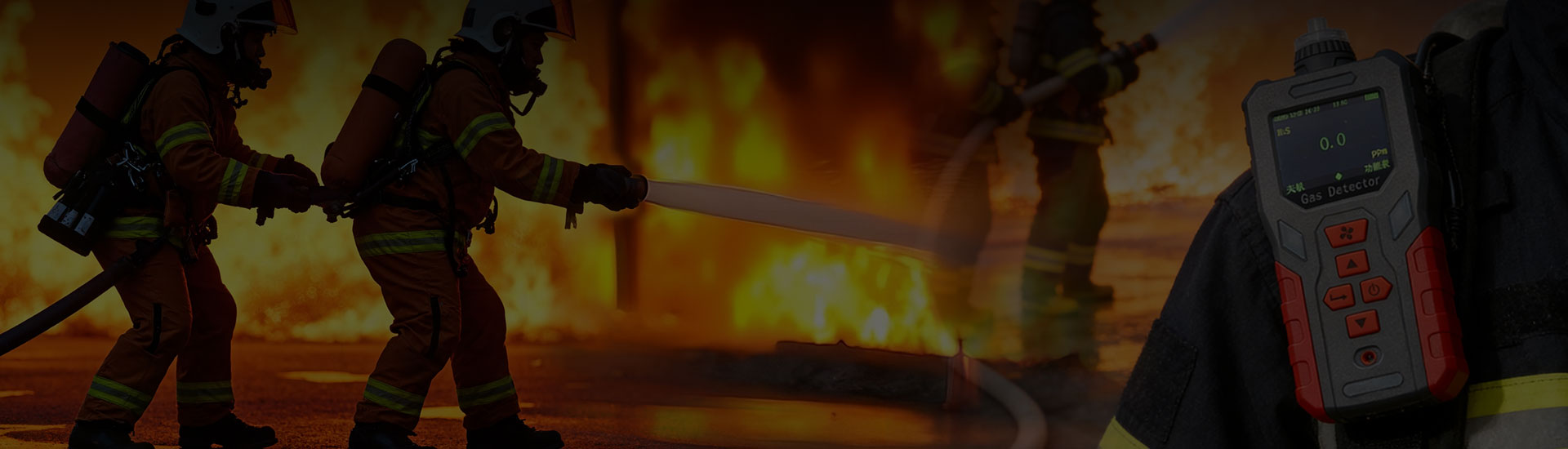
How to Set the Alarm Level of a Gas Detector: a Scientific Line of Defense for Safeguarding Safety
Gas detectors play a critical role in industrial production, laboratory discussion and even family life. They monitor the concentration of poisonous and harmful gas or combustible gas in the air at any time, and if the value is abnormal, the alarm will be announced. However, many users often miss the most critical link: how to scientifically set the alarm level of the gas detector. The setting of error may not only lead to frequent false alarm, disturb normal production, but also may cause false alarm due to too high threshold at critical time, resulting in irreparable safety accident. Therefore, knowing and correctly setting the alarm level is the central address for building the security defense.
First, we need the underlying logic that defines the alarm level of the gas detector. Generally, gas detectors are set to two levels of alarm: Low Alarm and High Alarm. The low alarm is the primary warning function, indicating that the gas concentration of the on-site personnel has begun to rise, and there may be a risk of leakage, requiring inspection and ventilation; A high alarm means that the danger is burning, the concentration has reached the critical point that may cause poisoning, explosion or fire, and it is necessary to immediately initiate emergency plans, such as cutting off the gas source, evacuating people and initiating the exhaust system.g. For combustible gases, alarm values are usually measured as a percentage of the lower explosive limit (LEL); For toxic gases, the maximum allowable concentration (MAC) or the short-time touch allowable concentration (PC-STEL) in the National Hygiene Standards for Work is mostly expressed in parts per million (ppm).
Secondly, it is necessary to set the alarm level in strict accordance with the national standards and industry standards, and it must not be arbitrarily voted by experience. In China, GB 50493 Design Standard for Combustible Gas and Toxic Gas Detection and Alarm in Petrochemical Industry is the guidance document of the Center. The standard clearly specifies that the low alarm value of combustible gas is generally set as 25% of the lower explosion limit and the high alarm value is set as 50%. The scientificity of this setting is that when the concentration reaches 25% LEL, although there is still a large interval for interval explosion, it is sufficient to prompt the operator to intervene and eliminate the hazard in the bud; While 50% LEL is an absolute red line of danger, it is necessary to trigger the highest level of emergency care. With regard to toxic gases, it is more prudent to set the alarm value. Usually, the low alarm value is set to 50% of the operating touch limit or MAC value is directly used. The high alarm value is appropriately floated according to the toxic characteristics of the gas to ensure that a warning is declared before the person is physically injured.
Moreover, the messy nature of the practice scenarios requires us to make flexible adjustments based on compliance with standards. Different operating environments, gas dispersion conditions, and personnel exposure time affect the final setting of alarm thresholds. For example, when working in a confined space, where gas is highly susceptible to build up due to poor air circulation, a more sensitive low alarm setting may be required to detect minor leaks early. On the contrary, in some industrial environments where there are setting disturbing gases, if serious compliance with the standard low limit settings results in repeated false alarms, the operator may have a “wolf come” paralysis. In this case, the technician needs to fine-tune the alarm threshold based on the field measured data under the premise of ensuring safety, or introduce intelligent algorithm to filter the disturbance signal. However, any adjustment is necessary to go through severe hazard assessment and reading process. It is strictly prohibited to lower the high alarm threshold without permission.
In addition, timing calibration and protection are critical links to ensure the effectiveness of alarm levels. The sensor of the gas detector will age or drift over time, resulting in reading rejection. If the sensor sensitivity decreases, even if the correct alarm level is set, the gas concentration may already exceed the limit at the time of practical actuation. Therefore, the enterprise shall establish a severe timing calibration system, and use standard gas to test the detector to ensure that it can act accurately at the set low and high alarm points. Meanwhile, check whether the sound-light alarm operates normally to ensure that the alarm sound can be clearly heard and the warning light can be clearly seen in the noisy industrial environment.
Finally, setting the alarm level is only the first step, and the supporting emergency response mechanism is the end of closed-loop management. When the detector declares low alarm, the on-site personnel shall quickly wear protective equipment for troubleshooting; Once the high alarm is triggered, the automatic control system shall be linked immediately to cut off the valve and initiate the fan. Only by organically combining scientific threshold setting, accurate hardware protection and efficient emergency procedures can the gas detector really become a solid shield for life safety. In this industrial world full of uncertainty, it is only with respect to standards and scientific settings that every alarm can be turned into a danger rather than a precursor to disaster.


 WhatsApp: 8619339980364
 E-mail: contact@hirepsafety.com