
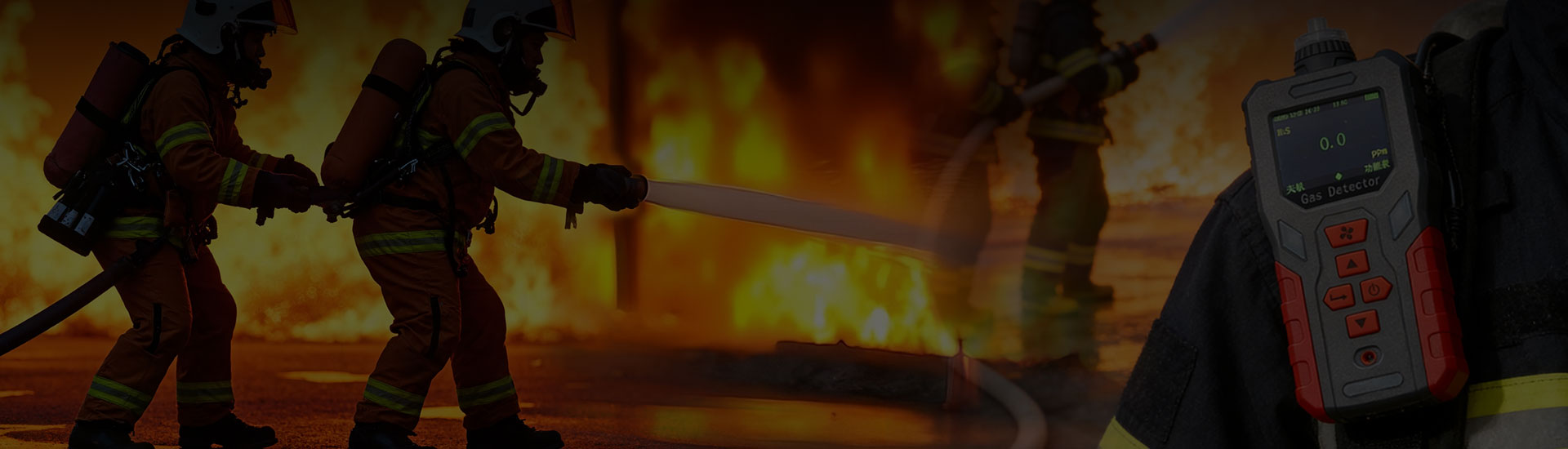
How to Choose the Right Gas Detector for Your Application
Invisible danger is often the most deadly. Next to the pipelines in petrochemical plants, underground in sewage treatment plants, and at the scene of fire rescue, colorless and odorless gases may quietly threaten the lives of people. As the first line of defense against gas damage, the importance of gas detector is self-evident. However, when you really need to purchase a gas detector, faced with many brands, different sensor skills and different product shapes in the market, you will often fall into the dilemma of selection. Wrong choice will not only waste money, but also make it impossible to announce an alarm at a critical moment, resulting in irreparable losses. This paper will provide you with a practical selection guide from the detection target, sensor skills, application scenarios, certification standards and protection costs to help you choose the most suitable and reliable gas detector for specific applications.
Clearly detecting the target is the primary task.
The first and most important step in selecting a gas detector is to know the kind of gas you need to detect. The gases involved in different application scenarios are very different. Combustible gases, such as methane, propane, hydrogen, etc., mainly exist in petrochemical, coal mine, catering kitchen and other places, and the key point is explosion-proof; Toxic gases, such as carbon monoxide, hydrogen sulfide, chlorine gas, ammonia gas, etc., are commonly used in sewage treatment, pharmacy, semiconductor manufacturing and other occupations, and the key point is accurate alarm at low concentration. In addition, in confined space operations (such as storage tanks and sewers), oxygen-deficient or oxygen-rich environments also kill people, so it is necessary to monitor the oxygen content in real time. The detection of volatile organic compounds (VOCs) generally involves environmental monitoring and occupational health, which requires a highly sensitive PID (Photoionization) sensor.
Many times, the site environment is messy, and it may be necessary to detect multiple gases at the same time. At this moment, it is the best scheme to choose a compound detector supporting multiple channels. Remember, don’t try to detect all gases with one sensor. The more targeted, the higher the safety.
Learn more about sensor skills.
Sensor is the “heart” of gas detector, and its skill principle directly determines the life, accuracy and anti-interference ability of the instrument. At present, the sensor skills of the mainstream are different. Electrochemical sensors are mainly used to detect toxic gases and oxygen. Their advantages are high sensitivity, low power consumption and moderate cost, but their disadvantages are limited service life, generally only two to three years, and they are greatly affected by temperature and humidity, and are prone to cross-interference. Catalytic incineration sensor is a traditional and mature combustible gas detection skill with low cost, but it needs to work in an aerobic environment, and it is easy to be poisoned by silicide and sulfide, so it cannot detect high concentration gas.
Infrared (NDIR) sensor uses the absorption characteristics of gas to specific infrared light. Its biggest advantage is that it has a long service life, which can reach five to ten years. It is not affected by poisoning and can operate without oxygen. It is especially suitable for detecting carbon dioxide and high-concentration combustible gas, but its cost is relatively high. Photoionization (PID) sensor has extremely high sensitivity to VOCs, and can detect gases of ppb level. It is widely used in environmental protection laws and leak investigation, but it cannot identify specific gas components and is significantly affected by humidity. When selecting, it is necessary to combine budget and frequency of application. If it is a long-term continuous monitoring and the environment is harsh, although the initial investment of infrared sensors is large, the whole life cycle cost may be lower; If it is a short-term inspection, electrochemical sensors are more cost-effective.
Determine the instrument shape according to the scene
The shape and installation mode of the instrument are determined by using the scene. Portable detector is suitable for personal safety protection, mobile inspection, test before entering confined space and emergency response. Pay attention to its weight, wearing comfort, battery life, and generally meet the needs of a shift of eight to twelve hours, as well as whether it has the function of data recording. As for rescuers, the instrument also needs to have the triple alarm function of sound, light and vibration to ensure that it can be found in noisy environment.
The fixed gas detection system is suitable for factories, pipelines, warehouses and other areas that need 24-hour uninterrupted monitoring. Fixed detectors are generally installed near the leakage source or where gas is easy to accumulate, and connected to the central control room. When selecting, explosion-proof grade and protection grade should be considered. It is suggested that IP65 or above, signal output mode such as 4-20mA, RS485 or wireless transmission, and whether to support actuators such as linkage fans and valves.
Attach great importance to certification standards and environmental adaptability
It is necessary for safety equipment to meet strict professional standards. In China, it is necessary to check whether it has the type approval certificate of CPA measuring instruments and explosion-proof certificate. If the products are exported or used in foreign-invested projects, it is necessary to pay attention to international certification, such as UL, ATEX and IECEx. Instruments without compliance certification can not only fail to pass the safety inspection, but also fail at critical moments.
In addition, environmental adaptability can not be ignored. If the instrument will be used in high temperature, high humidity, dusty or corrosive environment, it is necessary to select products with high protection level and special raw material shell. Extreme temperature will seriously affect the reading of the sensor, so it must be acknowledged whether the operating temperature scale of the instrument covers the field working conditions.
Inductively consider the protection cost and after-sales service.
Buying instruments is not a one-time investment, and subsequent calibration, protection and sensor replacement are long-term costs. Electrochemical sensors need timing calibration, while infrared sensors have less protection. When choosing a brand, we should investigate its after-sales response speed, spare parts supply ability and whether it provides fast calibration service. Some high-end brands provide cloud processing platforms, which can remotely monitor equipment status and push calibration reminders, greatly reducing the difficulty of processing.
Selecting a suitable gas detector is a systematic project, and the requirements are summarized to consider the variety of gas to be detected, sensor skills, application scenarios, compliance certification and life cycle cost. Don’t simply take the price as the only measure, because in the safety field, the reliability of the instrument is directly related to the safety of personnel. Only by in-depth analysis of their own needs, selection of products with matching skills and excellent quality, and establishment of standard protection and maintenance guidelines, can we really build a solid security line. In the face of invisible dangers, let the appropriate gas detector become your most trusted partner.


 WhatsApp: 8619339980364
 E-mail: contact@hirepsafety.com