
Gas Detection Solutions for Confined Spaces
In the depths of industrial production, in the underground clue of the city, there are many forgotten corners: deep sewage wells, huge storage tanks, narrow underground pipe corridors and long-term closed cabins. These spaces have a common name-confined space. They are often poorly ventilated and limited in import and export, but they are an indispensable link in maintaining urban work and industrial production. However, it is in these seemingly calm spaces that invisible fatal threats lurk. Every time you enter, it’s like a game with an invisible enemy, and the gas detection plan is the only shield to protect life in this game.
The danger of confined space lies in its invisibility. The air may look clear and transparent, and it doesn’t smell strange, but deadly hypoxia, accumulated flammable and explosive gases or highly toxic hydrogen sulfide may have filled the whole space now. Statistics show that the vast majority of incidents in confined spaces do not occur during the operation, but in blind inquiry before entering or blind rescue after the incident. Therefore, a mature gas detection plan is not only as simple as buying several alarm devices, but also a safety culture that goes deep into the bone marrow and a set of close logic that runs through the operation.
Real security starts from the moment before entering. At the moment when the manhole cover or tank mouth is opened, the hazard control has been started. At this moment, it is extremely dangerous to rely on the sense of smell or experience of personnel, so it is necessary to rely on professional pumping gas detection equipment. The operator stands in a safe area, and after extending the sampling tube, samples the interior of the space in layers like a doctor’s auscultation. Due to the different densities of gases, hydrogen sulfide heavier than air will deposit at the bottom, while methane lighter than air will gather at the top. If only the middle position is detected, it will leave a fatal blind spot. Only when the oxygen concentration, combustible gas concentration and toxic gas concentration at the upper, middle and lower levels are all in a safe scale, and the “entry permit” is issued after a strict review process, the personnel are allowed to step into this unknown area. This is not only a procedural requirement, but also a solemn promise to life.
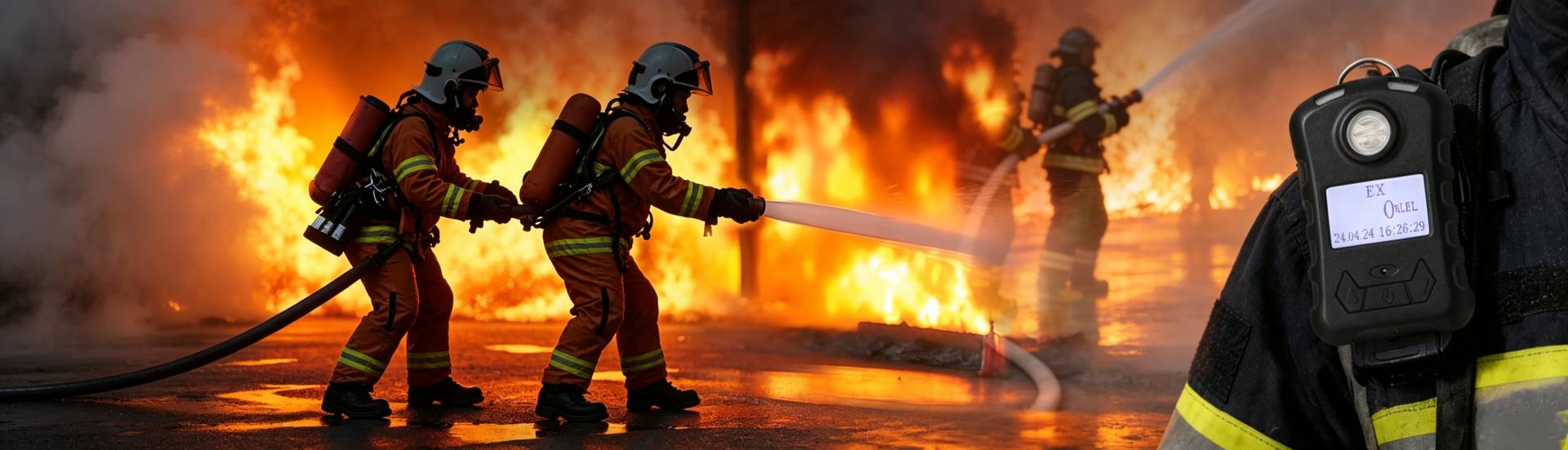
When the workers actually entered the confined space, the detection task was not completed, but entered a more critical dynamic monitoring stage. The environment in the space is active, stirring the sludge at the bottom may release high concentration of toxic gas instantly, and the sparks generated in welding operation may ignite the combustible gas accumulated quietly, or quickly consume valuable oxygen. Therefore, it is necessary for every entrant to carry a portable compound gas detector with him. This small device is the operator’s “second pair of eyes” and “third ear”, and it needs to monitor the changes of the surrounding air at all times. Once the value is abnormal, the triple alarm of sound, light and vibration will sound immediately, giving an evacuation instruction. This continuous and accompanying monitoring ensures that people can get early warning at the first moment in any unexpected situation, so as to win valuable escape time.
With the development of science and technology, the modern gas detection plan is undergoing an intelligent change. The traditional single point alarm is being replaced by the Internet of Things technology. Nowadays, the intelligent detector can transmit the gas concentration data and personnel position information to the monitoring center on the ground through the wireless network in real time. Managers sitting in front of the screen can clearly see the change of gas at every meter depth underground. More importantly, these systems can be linked with forced ventilation equipment. When the sensor detects the decrease of oxygen content or the increase of combustible gas concentration, the system will actively start a high-power fan for replacement, and even physically block people from entering through the electronic locking system before the danger is eliminated. This change from “passive alarm” to “active intervention” has greatly improved the energy level of safety protection. Together, all test data will be recorded by the cloud, forming a traceable “digital black box”, which provides a solid basis for subsequent security analysis and responsibility definition.
However, no matter how advanced the instrument is, it cannot replace people’s sense of responsibility. After all, people are the core of the gas detection plan. If there are no trained operators, do not know how to calibrate the instrument correctly, do not understand the meaning behind the alarm, and do not know how to wear a respirator to save themselves in an emergency, then the expensive equipment is just a pile of scrap iron. Therefore, it is necessary for a perfect gas detection plan to include a strict training system and emergency drills. Let every operator understand that every number displayed by the instrument is related to life and death, and every alarm is a call for help. Together, it is necessary to resolutely put an end to the tragedy of blind rescue, equip with professional rescue equipment and positive pressure air respirator, and ensure that the rescue operation is carried out under the premise of certain safety.
Gas detection in confined space is a war without smoke, and the opponent is the most hidden killer in nature. This plan is not only a pile of technology, but also the ultimate respect for the value of life. It integrates risk assessment, precision instruments, intelligent interconnection and rigorous system, and weaves an airtight safety net. With the maintenance of this network, the buried pipelines can be dredged, the huge storage tanks can be repaired, and the pulse of the city can continue to beat. Every safe entry and exit is the best affirmation of this plan. Let us use the strength of science and technology and the rigidity of the system to hold this line of defense, so that every worker who struggles in a confined space can breathe safe air and return safely to the sun.


 WhatsApp: 8619339980364
 E-mail: contact@hirepsafety.com